Pest advice for controlling Mice
Although commonly identified as pests, some are bred and kept as pets. Globally there are hundreds of types of mouse, including varieties such as the deer mouse (Peromyscus), house mouse (Mus musculus domesticus), wood/field mouse (Apodemus sylvaticus), Edible dormouse (Glis glis), spiny mouse (Acomys) and even the striped zebra mouse (Lemniscomys).
The dangers: why we control mice
Although mice are often considered to be cute by some people, they are a public health pest and can cause serious harm. Mice have been known to spread nasty diseases – such as Salmonella and Listeria – to humans through their urine, droppings and bedding.
Mice have a need to mark their territory with their urine and due to their sporadic eating habits, build nests near food sources. This puts anyone with an infestation at risk of food poisoning. As they scurry around, they carry dirt and bacteria with them, transferring it to your counter tops, cabinets, pantry and anywhere else they travel.
Mice around businesses
Property and land owners have a legal obligation under the Prevention of Damage by Pests Act 1949 to keep premises rodent free, or, if rodents pose a threat to health or property, to report infestations to the local authority.
Owners of food businesses also have obligations to keep premises pest free under the Food Safety Act 1990. Environmental Health Officers or General Enforcement Officers can issue enforcement notices to business owners who don’t have adequate pest management procedures in place.
Learn How to Catch a Mouse and Keep Mice Out of Your Home with These Tips
No matter where you live or how long you’ve called the place home, there’s no good time to discover that a rodent roommate has set up shop in your humble abode. From finding mouse droppings in your closet to potential kitchen thievery, the whole shudder-inducing situation is a big fat disaster that homeowners or renters never want to deal with.
So, now that you have an unwanted pest guest, how do you kick him or her to the curb? While you might think you have an idea of how to do this (more so than say, how to get rid of a snake or how to get rid of drain flies), you might be surprised by some of the myths around how to catch a mouse.
ENTRY POINTS
Whether you live in a studio or standalone dwelling, Carrillo notes that every residence has small structural openings, which contractors typically make to accommodate your water, gas, electrical, and data lines. Mice, from either the dirt or sewer, can actually travel through these lines into wall and floor cavities and pop out into your house. Believe it or not, they’re capable of squeezing into spaces as small as a quarter of an inch (yikes).
LACK OF SANITATION
This point is pivotal—any old trash or unsealed food can quickly beckon rodents. “Even if you keep your kitchen spotless, if you have last night’s dinner in your garbage can, that’s still generally an accessible food source for a mouse,” warns Carrillo. To that note, he also adds that the furry critters favor dry goods, like breads, pastas, crackers, and junk food. Put all those Castile soap uses to work and scrub your kitchen down until it’s sparkling clean.
RELOCATION
If your neighbor managed to permanently chase the mice out of their house or apartment unit, that unfortunately means they might migrate to yours. “Sometimes, it’s just a matter of relocation more than attraction,”
Mouse Traps and Trapping Mice
Mice traps for rodent control come in many types of styles. The most common and effective mice traps are snap traps, muliple mice traps and glue traps. The snap type of mice trap has been around a long time. New types of snap traps are constantly coming on the market. Trapping mice requires skill and time.
Location : Good trap placement is an essential step for effective use of mouse traps. Inspect first to determine the activity of the mice. Place traps in areas of high activity. Typical active areas are along walls, behind appliances, behind objects, and darkened corners.Placing mouse traps out evenly at a set distance may provide thorough coverage, but it is not guaranteed to reach the mice. Place traps in areas where mice are running or nesting. To maximize the chances of mice passing over the traps, place along their runways or paths. Place mouse traps at a right angle from the wall, with the trigger end almost touching the wall. If they are set parallel to the wall, set them in pairs with the triggers situated to intercept mice coming from either direction.Use more traps for heavier populations
Use Enough Traps: A common trapping error when placing out mice traps, is to use too few traps. Even for just one or two mice, using six traps are not too many. Place mice traps at intervals of two-ten feet apart. In a typical residential example, use two traps behind the stove, two traps behind the refrigerator, and two traps under the kitchen sink. Most of the time, mice are caught the first night. In a storage room in a restaurant, two dozen traps may be required.
Two Mouse Traps (Snap Traps or Glue Traps) Placed Together : In locations of high mice activity, use two snap or glue mouse traps together, with about 1″ space between them. This would catch mice that try to jump over the traps, a particularly common occurrence.
Aggressive Trapping: Take advantage of the first trap night when trapping mice. More mice are caught the first night, than the following nights. Make sure to set out plenty of traps to take advantage of the timing.
Poisons Used to Kill Rodents Have Safer Alternatives
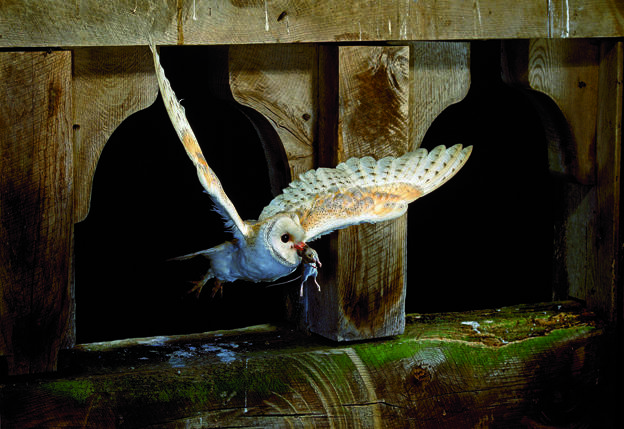
Each image was, in her word and my perception, “sadder” than the last. There was the great horned owl with a hematoma running the length of its left wing; the red-tailed hawk’s body cavity glistening with unclotted blood; sundry raptors with pools of blood under dissected skin; the redtail with a hematoma that had ballooned its left eye to 10 times normal size; and, “saddest of all,” the redtail with an egg. The well-developed blood vessels in her oviducts had ruptured, and she had slowly bled to death from the inside.
All these birds were victims of “second-generation anticoagulant rodenticides” used by exterminators, farmers, and homeowners. They’re found in such brand names as d-Con, Hot Shot, Generation, Talon, and Havoc, and they sell briskly because of our consuming hatred of rats and mice. The most pestiferous species are alien to the New World and therefore displace native wildlife; they contaminate our food and spread disease. We also hate them for their beady eyes, their naked tails, and their vile depictions in literature, from Aesop to E.B. White. So the general attitude among the public is “if a little poison’s good, a lot’s better.” But even a little second-generation rodenticide kills nontarget wildlife.
Both first- and second-generation rodenticides prevent blood from clotting by inhibiting vitamin K, though the second-generation products build to higher concentrations in rodents and are therefore more lethal to anything that eats them
Fish and Wildlife Service contaminants specialist Michael Fry makes this point about the widespread use of second-generation rodenticides by people oblivious to the dangers: “One good reason for using first-generation poisons is that if you do have a problem, like developing tolerance, you want a backup. If you go in with your strongest thing first, there’s no backup.”
For a rodent to get a lethal dose from a first-generation rodenticide it has to eat it more than once, but that’s not a problem. Leave first-generation baits out for a week and they’re just as efficient as the second generation. What makes second-generation rodenticides so non-selective is that they kill slowly, so rodents keep eating them long after they’ve ingested a lethal dose. By the time they expire, or are about to, they contain many times the lethal dose and are therefore deadly to predators, scavengers, and pets.

Rodents, Food, and Humans – a Deadly Combination
It’s no secret that rodents and food simply do not mix. The sight of a rodent not only deters your customers from returning, but is also attached with major health issues and public safety concerns.
The How
Rodents are dangerous pests that are associated with many diseases. Rats and mice don’t bother to wipe their feet before entering, and they certainly don’t care where they take care of their bathroom needs. For these reasons, many rodents are dangerous transporters of food-borne pathogens, which can be transmitted through saliva, urine, and droppings. In just one day’s time, a single rat can produce 50 half-inch droppings – that’s over two feet of coverage per rat.
Hantavirus Pulmonary Syndrome – A disease carried by some rodents that is spread through direct contact or breathing in dust that is contaminated with rodent urine or droppings. Early symptoms include fatigue, fever, muscle aches, stomach problems, dizziness, and chills; and late symptoms, occurring within 4 to 10 days, present as coughing, shortness of breath and lungs filled with fluid. It is not only your customers who are at risk, but your employees’ health as well.
Rat-Bite Fever – Those exposed to rats carrying the bacteria are at serious risk, even if they aren’t bitten. Rat-bite fever causes fever, vomiting, headache, muscle pain, joint pain and rash. It can be cured with treatment, but if left untreated, rat-bite fever can be fatal.
Salmonellosis – A bacterial infection that can be contracted from eating food contaminated by rat feces. Symptoms include diarrhea, fever, and abdominal cramps and can last four to seven days. Severe cases require hospitalization.