How To Get Rid Of A Wasp Nest
Wasps are known to sing even when they are not provoked. Therefore, it’s essential to understand the correct methods on how to get rid of a wasp nest correctly. Removing a wasp nest can be challenging as a sting from a wasp can be extremely painful, especially if there is a chance that you may be allergic to a wasp sting. Wasp nest removal is therefore required when you notice any level of activity in and around your property. To reduce the risk of being stung.
Although we offer tips on how to get rid of a wasp nest, we always advise not to attempt it yourself. Instead, get a professional pest control company to remove the wasp nest. Removing a wasp nest can be extremely dangerous. Multiple stings can lead to a hospital visit and in rare cases where wasps have stung inside the mouth or other sensitive areas – death.
About Wasp Nests
Wasp nests have been known to home up to 20,000 wasps. Nests can grow to the size of a small car if they are left untouched. Mind-boggling figures! The usual places in which wasps nests are found are loft spaces, sheds or inside cavity walls. However, they really can nest anywhere, so don’t be surprised if you find a wasp nest in an unusual place
Wasps are different from bees in the fact that they can sting continuously. Therefore, a wasp nest is capable of literally thousands and thousands of stings. Meaning as soon as you notice a wasp nest, you should be looking for methods on how to remove a wasp nest.
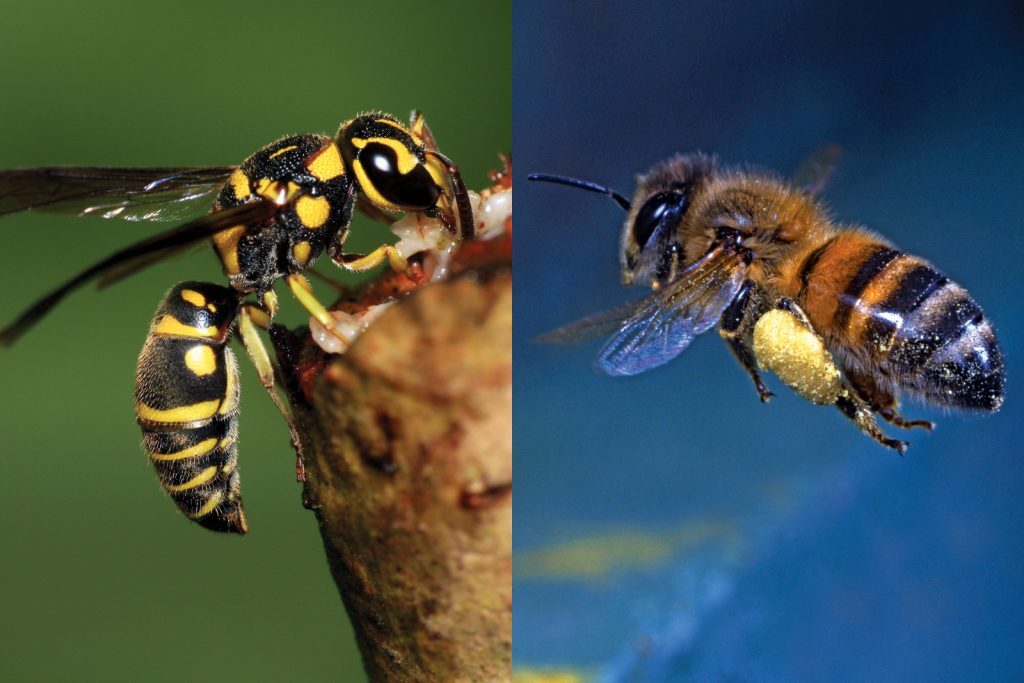
Do I have bees or wasps?
Don’t worry! If you have either of the three, there are tips available on how to remove the nest. Wasps, bees, and hornets can all be removed if you contact a professional and trained operative.
WAYS TO GET RID OF WASPS
Discover The Best Ways To Eliminate Wasps
Wasps are very annoying insects. Not only do they buzz around and insist on trying to settle on you, they can also deliver a nasty sting. People can be forgiven wanting to get rid of them. That can be done by either killing them or getting them to move away..
Keep Wasps Away From The House and Garden
Because wasps pollinate flowers, they are very likely to be found in the garden. This means they can be very annoying if you want to relax outside your own home. Here there are several ways to get rid of the wasps without resorting to killing them.
Create A Homemade Wasp Trap
For those who have no qualms about killing wasps, there are several ways to do this. One is by creating your own homemade wasp trap. A wasp trap can easily be made with items found around the home. All that is needed is a jar with a lid, some orange juice and a spoonful of jam.
Swat The Wasp
Swatting the wasp is the simplest, but arguably the least effective way, to kill wasps. A flyswatter can be used, but many people roll up a newspaper to do the swatting. Wasps are very quick and you will need to wait until they rest on a surface before you can swat. If your reflexes are not quick enough you could end up with a wasp which will attack to defend itself, leaving you likely to be stung.
Use Insecticides
Insecticides, delivered via an aerosol can are a very effective way of getting rid of, and killing, wasps. The main problem is that they are really only effective in enclosed spaces with windows and doors closed.
How to Get Rid of a Wasp Nest in the Roof
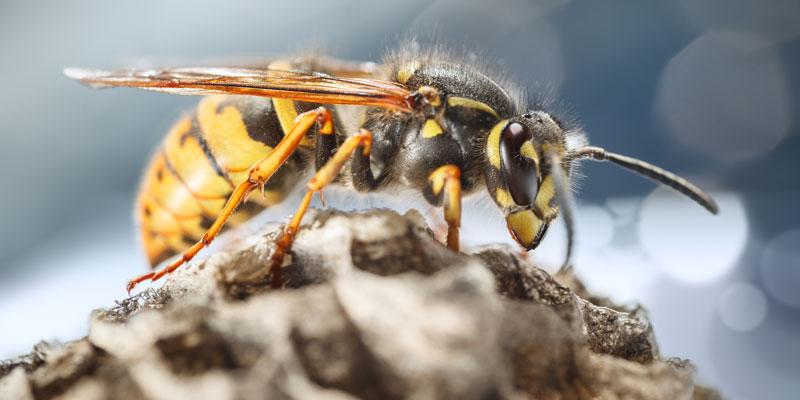
It can be a very scary moment. There you are, enjoying an early summer’s afternoon on your deck and suddenly you notice worker wasps flying into and out of your roof’s eaves. The scary part? Unlike with ground nesting wasps, this means the pests are actually living in your house! You better find out how to get rid of the wasp nest in the roof before things get out of hand.
Before You Begin
First, the best way to remove wasp nests is to call a professional roofing company who will do a full roof inspection. If you decide to do your own pest control and tackle the nest removal yourself, you must make sure you are not allergic to wasp stings. If you’re not sure, you will need to visit your doctor to be tested for the allergy. Remember, your nest may be home to one of many different species of wasps, including yellow jackets, paper wasps and bald-faced hornets.
Steps to How to Get Rid of a Wasp Nest in The Roof
Safety is even more important for something like getting rid of wasps and bees than it is normally. If you are attacked and/or stung, it can trigger a panic reaction and make you act before thinking.
Wear protective Clothing – To further reduce the chance of being stung, you should wear long-sleeved shirts, long pants, socks, gloves, shoes, a hat and even face covering and safety goggles. And that’s regardless of the time of year. No excuses for it being hot outside.
Locate the Wasp Nest – If you noticed wasps entering through your soffit, they may be in the eaves just above the soffit, or they may be in the rafters of your attic. Use that exterior entry point as a guide to finding the nest. If they are in the home, the sound of wasps chewing wood during the day can lead you to the nest.
Approach the Nest in the Early Evening or Early Morning – It is important to get rid of the nest when all the wasps are ‘at home’. While this might seem counter-intuitive, it is better to get rid of the nest when the wasps aren’t active.
Use Water or Wasp Killer – If the nest is in the eaves and visible from the outside after you remove the soffit, you may be able to spray the nest with water. Be sure to use the high-velocity setting on the hose’s nozzle. A pressure washer may damage your roof. Keep spraying the nest until the water completely soaks and destroys it. Plan an escape route if you are attacked. If you use a wasp killer, follow the instructions on the can.
Natural Wasp Killer – How To Get Rid Of Wasps Without Chemicals
While there are plenty of harsh chemicals that can kill wasps, you may be looking for a natural wasp killer to keep your summer gatherings pest- and sting-free. Natural wasp killers are cheaper, don’t contain any harmful chemicals, and you can often make them with ingredients you have on hand.
Natural Wasp Killer—Traps
The first natural wasp killer we recommend are traps. Whether you prefer to purchase them or create your own homemade version, traps are a highly effective way to kill wasps naturally.
DIY
To DIY a natural wasp killer, take a two-liter soda bottle, cut the neck off, and throw away the top. Fill the bottle about halfway with water. Spread the jam around the bottleneck, and then place it back on the bottle upside down, making sure to secure the bottleneck with tape. Then put it close to where the wasps congregate.
What makes this homemade option so effective is that the wasps enter the bottle because of the jam, but they have a hard time getting out. Eventually, they drown in the water, and you can make this wasp killer even more effective by adding some dish soap.
Store-bought
If you’d rather buy one, there are plenty of all-natural wasp traps, such as a glass option that uses bait to lure them into a beautiful trap that looks more like decoration. You can also find a “trap” that keeps wasps away instead of killing them. Wasps avoid the nests of other wasps, and this “trap” looks like a nest, which will maintain them up to twenty feet away.
Are Wasps Dangerous? A Complete Guide to Wasps
A wasp’s nest near your home can be a source of anxiety for your whole family and with good reason. Like their close relatives, bees and hornets, wasps have painful stings, are territorial, and tenacious in defense of their homes. But are wasps dangerous, and if so, what sort of threat to they present to your loved ones?
What do Wasps Look Like?
With so many different species of stinging insects, knowing what you’re up against is important. Some stinging insects can be dangerous but others are massively beneficial to the local environment, so learning a few identifying characteristics is key to helping you assess your pest control needs
All wasps have:
6 legs
2 wings
2 antennae
Large mouthparts (mandibles)
A signature “pinched” waist
Female wasps have a large stinger while males have none. Typically, wasps range from ¼ inch to 2 inches in length. While wasps come in many different colors, they are most commonly black and yellow, dull red, or shiny black.
How Long do Wasps Live?
A normal wasp lifespan lasts between 12 and 22 days. The queen, however, can live up to a year, during which time she can lay more than 75,000 eggs, the bulk of which she will lay during the Summer.
What Does a Wasp Nest Look Like?
Most wasps build their nests out of a paper-like, wood-based substance called cellulose. Nest types fall into three different categories, exemplified by the three most common wasp species found.
Yellow Jackets build large nests, often underground in abandoned rodent burrows or in protected structures like rotting logs or pipes. Less commonly, they sometimes build nests in exposed areas such as tree branches. Their nests have a single entrance and strong outer layers to protect the colony, which can number up to 15,000 individuals.
Paper Wasps build small exposed nests made up of a distinct honeycomb-like structure. Their nests are usually no more than 5 inches across, rarely supporting more than 200 adults. Anchored to a surface by a single stalk, they’re commonly found in sheltered areas such as under tree branches and the overhanging edges of roofs.
Mud Daubers make single-family nests out of a blend of soil and saliva in a distinctive tubular or “pipe organ” shape. Their nests are typically found on the sides of buildings or in underground burrows.