How To Transport Loading Services

REMOVALS AND STORAGE

Not all house or office removals can be completed in one transaction. There may be delays in transferring funds for example, or perhaps your new home isn’t ready to move into. There can be many reasons why you may need to put your house contents, furniture and belongings into storage and here

will pack your belongings into purpose-built storage containers when you move out of your home and seal them in your presence before taking them to our secure storage facility where they will remain untouched until they are delivered to your new home. There is no limit to how long your possessions can stay

As you would expect, our storage facilities are some of the best in the industry; all are equipped with the very latest security alarm systems and CCTV surveillance monitored.

understand that the things you store with us are precious to you – otherwise you wouldn’t be storing them. We treat everything with the highest level of care, just as you would yourself. For your additional peace of mind, comprehensive insurance can be arranged on request.
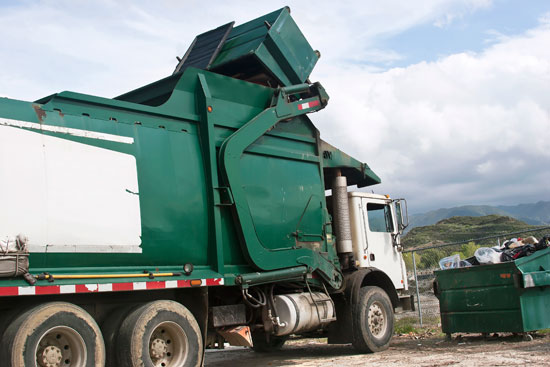
Commercial trash removal solutions

Commercial dumpster sizes

The most common commercial front-load dumpster sizes include 2, 4, 6, and 8 cubic yard containers. (Some dumpster rental companies may have other sizes available.) Most brick-and-mortar small businesses will need a 2 yard dumpster or larger

A small commercial dumpster, like a 2 or 4 yard bin, works well for a small retail shop, restaurant, or other small commercial establishments. Larger businesses will likely need a larger container, like 6, 8, or even larger dumpsters. Large apartment complexes, busy restaurants, highly-trafficked gas stations, and large retail stores are businesses that could benefit from larger dumpster sizes.

The largest of commercial buildings, retail stores, and industrial buildings utilize commercial compactors. These 40 yard (sometimes larger) disposal containers are designed to compact the contents of the bin, eliminating any air gaps.

Business dumpster service varies in price and is based on location, type of business, size of business, and frequency of pick-up. Businesses customers in an average U.S. city can expect to pay $100 to $200 per month for commercial front-load dumpster service. This pricing includes weekly pick-up. Costs would rise if more frequent pick-ups are necessary.

How to choose a waste hauler

In most cities, you have choices when it comes to commercial trash removal services. While some business owners limit their search to big-name companies, like Waste Management or Republic Services, there may be better options available.

How to Dispose of Old Furniture

Disposal Options to Get Rid of Furniture

Figuring out what to do with old furniture can be a challenge, whether you’re downsizing for a move or simply restyling your home. Donating or selling your furniture can keep it from the landfill

Sell

If your furniture is clean and in good condition, you can hold a garage sale or contact a local resale shop to sell it. Or try advertising with an online service.

eBay

Letgo

OfferUp

Craigslist

Facebook Marketplace

Donate

Donating furniture in good condition can make a huge difference for someone in need. Contact local shelters, furniture banks, or larger organizations.

Goodwill

Freecycle

Donation Town

The Salvation Army

Habitat for Humanity

Furniture Bank Network

Vietnam Veterans of America

Toss Curbside

This option is typically the most convenient in residential settings, but you’ll need to take some time to research your local regulations first. At apartments, furniture is not accepted in front load dumpsters or compactors. Depending on your area, you’ll need to consider possible restrictions, such as:

Extra fees for furniture pickup with regular trash.

Rules for wrapping upholstered furniture in plastic.

Limits on the number of furniture items left curbside.

Hire a Junk Removal Service

If you only need to toss a few items, but can’t lift them yourself, you might consult a junk removal company. They’ll come to your home and remove the items for you. However, space in their trucks is usually limited. This process typically involves:

Varied rates for individual items.

You sorting items prior to the scheduled day.

Team members entering your home to remove the furniture.

Average Removal Costs

The removal costs will depend on the following factors:

Whether your removal is a full or part removal

The volume of your goods

The distance between the pickup location to your destination

Access to your property

Full Removal

A key factor in the cost of your removal to France is the type of removal. A full removal is the removal of most or all goods from a property which are then transported to the destination. They are common for those who are moving to France, or are relocating their business and want to transport a large number of goods from the premises.

Part Removal

A part removal is when you want to transport some of your possessions or items. You could be wanting to transport some furniture or perhaps organise a vehicle removal. It is cheaper than a full removal as you will only be needing to transport some items. Like a full removal, a part removal is calculated by assessing the total volume of your items, the distance from A to B and how easy it is to access your property.

Unlike a full removal, the cost of a part removal is also calculated according to your removal date. This is because, as your items are transported with other part removals, it may be cheaper for us to collect your items when we are in your area. Likewise, if you need to move on a certain date, it may increase the cost due to our team being in a different area of the country.

How to transport loads

When you transport any kind of load, your vehicle or trailer must be loaded safely so it doesn’t endanger other road users, you or your passengers, or damage road infrastructure. This means ensuring that your load:

is properly restrained

doesn’t overhang dangerously

doesn’t exceed mass limits

doesn’t cover lights, indicators, reflectors or the number plate.

Restraining your load

If you’re in control of a light vehicle, you’re responsible for ensuring your load doesn’t make your vehicle unstable or unsafe, and can’t fall or be dislodged from the vehicle. To keep your load safe, you must:

select the right vehicle

position the load correctly

use the right method of load restraint.

Garden refuse

Garden refuse can be light enough to blow off a ute or trailer during transport. Use a secured tarpaulin or netting to prevent light items blowing away and endangering other road users.

Furniture and white goods

Restrain tall items of furniture or white goods (such as fridges) to head boards to ensure they don’t fall over when you brake, turn or take evasive action. If the furniture extends above the sides of the ute or trailer and isn’t tightly packed, tightly restrain it using rope or webbing straps. Rubber matting under the load can help prevent movement.

Tools

Do not transport loose, smaller tools unrestrained in the back of utes or trailers. Instead, contain them within toolboxes that are restrained adequately. Restrain larger tools, such as shovels, rakes and lawn mowers, using ropes, straps or a cargo net if they’re not adequately contained by the vehicle body.
Professional Loading And Unloading Services

Vehicle Loading And Unloading – What You Need To Know

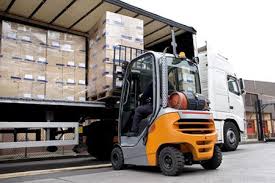
Before you start loading you need to ensure the vehicle / trailer is on firm, level ground, the brakes are applied and there is sufficient room for you to access both sides of the vehicle with your forklift truck.   If the driver is present you should obtain the vehicle keys from him until you have completed loading.  If loading a vehicle from a stepped loading dock it is especially important to remove the keys from the ignition so that the driver cannot drive away before you have finished loading.   Some loading docks have various different methods to lock the trailer onto the dock to prevent the vehicle from pulling away and you should be aware of the safety procedures in place at your particular site.

The correct way to go about loading a flat bed lorry or trailer is to start at the head board.  Please note if this is a trailer, detached from the tractor unit, you need to think about how much weight you are putting onto the front as there is quite a long overhang from the legs of the trailer to the headboard and putting too much weight on the front of an unsupported trailer can cause it to tip up, especially if you are double stacking loads.  Ideally, the vehicle trailer will have a tractor unit attached to it or you could think about putting a stack of unladen pallets under the front of the trailer to give the trailer some more stability.  Using standard pallets pick up the pallets on the narrow face and put your first pallet with the wide face of the pallet up against the head board of the vehicle on one side.  Your second pallet will then go onto the other side exactly opposite the first pallet.  Continue loading alternating from one side to another and once you have the same amount of pallets behind the supporting legs of the trailer as there are in front of, you can then remove your stack of empty pallets from underneath the front of the trailer.  Continue loading alternating sides pallet by pallet until you have completed your load. You can normally get between 20 – 24 standard pallets on a 40 ft trailer.

Offloading a trailer will be the exact reverse of this so take off pallets alternating from side to side, starting at the back of the trailer but again be aware that you may need to support the front end of the trailer if there is no tractor unit attached.

Please note if you are loading a container lorry or trailer from within a stepped loading dock, you need to make sure that the front of the trailer is supported if there is no tractor unit attached before driving onto the bed of the trailer with your forklift truck plus load as the combined weight can very easily tip up an supported trailer.   It is really important to remove vehicle keys to prevent the driver pulling away before you have completed loading.

There must be safeguards against drivers accidentally driving away too early.

This does happen, and is extremely dangerous. Measures could include:

  • Traffic lights.
  • The use of vehicle or trailer restraints.
  • The person in charge of loading or unloading could keep hold of the vehicle keys or paperwork until it is safe for the vehicle to be moved.
  • These safeguards would be especially effective where there could be communication problems, for example where foreign drivers are involved.

How to Use a Forklift to Unload a Shipping Container

A shipping container may be parked on the ground and needs to have contents put in or taken out, but there is a lip between the ground and the floor of the container. To safely access the container with a forklift, you need a dock board. Dock boards are also used in between a loading dock and the trailer or container. They will have enough capacity to support the forklift and the cargo being moved.

Forklifts and the Hazards of Loading and Unloading

On almost every substantial construction project, forklifts are used to move materials and these workhorses require careful safety precautions – The Bureau of Labor Statistics reports that in the United States, nearly 100 workers are killed and another 20,000 are seriously injured in forklift-related incidents each year. Loading and unloading materials is of particular concern although forklift overturns are the leading cause of fatalities involving forklifts; they represent about 25% of all forklift-related deaths.

Experts cite the following basic safety measures for loading/unloading:

  • Even on level ground, there is a risk of machine roll-over during loading or unloading. Make sure you are centered on the ramps and stay straight. Allow enough room to maneuver the trailer and machine, which is sometimes difficult on tightly compressed jobsites.
  • Use a spotter for guidance. Make sure the machine clears the ramps before turning. Keep people away from the sides of the machine during loading/unloading.
  • Check the trailer deck, clearances and stability. Review your lock-out/tag-out plan to be sure the machine is at “Zero Energy State” when stowed.
  • Use proper tie-down procedures. If using compression chain binders, use caution when opening the handle. The load may shift just enough to add tension to the chain and the handle may spring open. Use safety tie wires or switch to ratchet binders.
  • Secure Your Load

Safe Fork Use

The first and most important rule to follow with forklifts – don’t overload your equipment. You have to know the weight of what you are lifting or risk tip over. If you spill the load it will take you more time to clean it up than to split the load into two picks.

Many injuries to both the operator and co-workers occur because they were not familiar with the specific model and type of forklift. Take the time to walk around and look over the manual. Take the Opportunity to ask others who use that equipment, and practice a bit on the side in the open before jumping right in with a load.

Safe operating procedures depend on the specific type of lift. Not all forklifts work the same. Always perform a written Daily Equipment Inspection before using the machine.

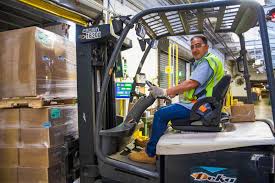
Always remain a safe distance and keep away from the swing area of the forklift. If you are the operator count & know how many grounds men are working with you. Once you are ready to pick the load the OPERATOR is in charge of the work until the load is back on the ground or bed of a truck. Respect this rule.

Never stand on or under the forks of the lift. Never ride on the side of a lift. Never use a forklift to raise or lower people. Both the operator and the rider are subject to company discipline action for these infractions. Using forks on equipment or a forklift is not a game.

Always pay attention to horns and back-up alarms from all heavy equipment, including forklifts. If operating any heavy equipment, always use seatbelts 100% of the time. More often you will sustain more or greater injury from a tip over if not wearing a seatbelt.

LOAD SECUREMENT

Secure the load to the frame and not the forks. Make sure the forks are all the way under the pallet and load before lifting.

Use a spotter to ensure the load is stable and guide you into the rack or atop the truck. Adjust the forks to be a proper width for the item to be lifted; too narrow it can fall off & too wide it can fall through.

Always lift just a few inches to check everything is ok before proceeding. Secure the load with s strap if you have to travel with it or lift it very high up. Whenever a load is on its “Slow–As-You-Go”.